
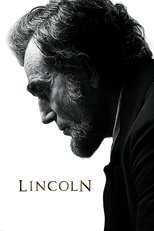
In the quiet hours of the pre-dawn, Abraham Lincoln reflects on the mathematical foundations of justice while drafting a crucial telegram. He uses Euclid’s axioms to explain the 'self-evident' nature of equality to two young telegraph operators, ultimately deciding to delay a peace commission to ensure the passage of the 13th Amendment.
LINCOLN: You think we choose to be born?
SAMUEL BECKWITH: I don’t suppose so.
LINCOLN: Are we fitted to the times we’re born into?
SAMUEL BECKWITH: I don’t know about myself. You may be, sir. Fitted.
LINCOLN: Euclid’s first common notion is this: “Things which are equal to the same thing are equal to each other.” That’s a rule of mathematical reasoning. It’s…
About This Scene
This scene features Abraham Lincoln engaging with two young telegraph operators, Samuel Beckwith and Homer Bates, in the quiet, pre-dawn hours. It offers a unique glimpse into Lincoln's philosophical mind as he grapples with the weight of leadership and the foundational principles of justice, using Euclid’s axioms to articulate his understanding of equality. The discussion ultimately informs a critical decision regarding a peace commission and the 13th Amendment.
Character Analysis
Lincoln in this scene is presented as a thoughtful, strategic, and somewhat melancholic figure, despite his calm demeanor. He embodies authority and wisdom, yet he is also a mentor, guiding his younger companions through a complex philosophical concept. Samuel Beckwith and Homer Bates, two young male telegraph operators, serve as an Everyman casting type, representing the common man confronted with profound ideas. They are respectful and somewhat deferential, but also a little out of their depth with Lincoln's intellectual pondering, providing a grounded contrast to his philosophical intensity.
Why This Works for Auditions
This group scene is excellent for auditions because it provides clear individual arcs and strong character dynamics within a relatively short timeframe. Actors playing Lincoln can showcase their ability to portray leadership, gravitas, and deep intellect, while the parts for Beckwith and Bates allow younger actors to demonstrate their listening skills, reactions, and ability to hold their own opposite a powerful presence. The tone shifts from calm pragmatism to philosophical reflection, offering a good range for all performers.
Best Suited For
This scene is ideally suited for male actors in their 50s for the role of Lincoln, and male actors in their 20s for the roles of Samuel Beckwith and Homer Bates. It's particularly effective for drama-school auditions, agent showcases, or self-tapes where actors want to highlight their capacity for nuanced historical drama. It also works well for general practice, allowing actors to explore character contrast and dynamic listening within a group setting.
Performance Tips
For the actor playing Lincoln, focus on conveying the quiet intensity and deliberate thought behind his words, using stillness and measured pacing to emphasize his authority and wisdom. For Beckwith and Bates, concentrate on active listening and subtle reactions; your characters are processing profound information, and your expressions should convey their varying levels of understanding and awe. Remember the historical context, but ground your performance in the human connection and the philosophical exploration of the ideas presented.