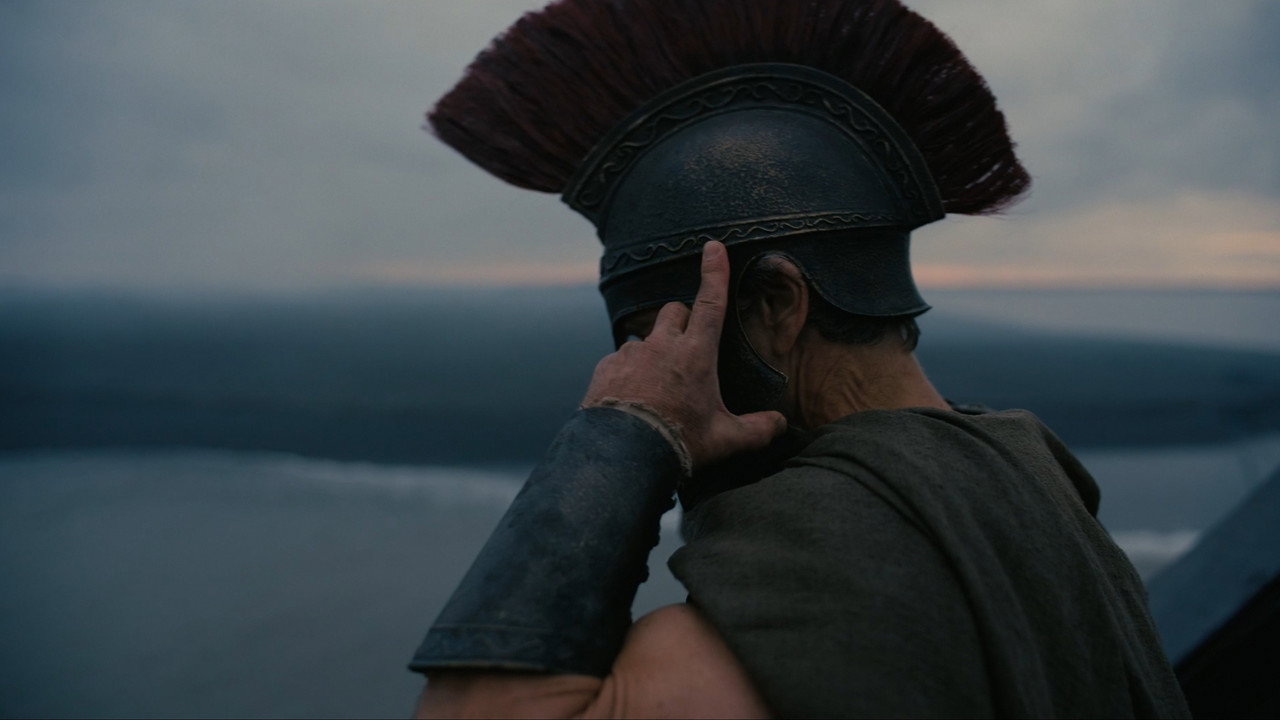
Film
duologue
Drama
Thriller

Odysseus and Eumaeus: A King's Return

from The Odyssey

Written by Christopher Nolan

The Odyssey

A disguised Odysseus questions his loyal servant Eumaeus about the state of his kingdom and the safety of his family.

Start a free 7-day trial — 5 downloads a day, unlimited when Pro begins

Rehearse this scene
Rehearse on your terms

Choose your role and voices for the other characters. Run the scene at your own pace.

Scene PreviewExcerpt — subscribe to read full scene

ODYSSEUS

What’s happened to Ithaca?

EUMAEUS

Darkness. Zeus’s law smashed to pieces. A kingdom without a king since my master died.

ODYSSEUS

Who was your master?

EUMAEUS

Odysseus.

ODYSSEUS

Odysseus? Hero of the Trojan War? He’s not dead –-
End of preview. Continue with Pro below.

7 days freeYour next rehearsal starts here

Found your next scene? Make it yours.

Start your free trial and read Odysseus and Eumaeus: A King's Return in full, with access to 4,000+ monologues and scenes to explore next.

  • Read the full scene and explore the library
  • Download your script in a clean, printable format
  • Take it into rehearsal with the Script Reader
Casting Types
Get Feedback
Coming Soon

Want expert coaching on this scene?

Browse our curated list of acting coaches, dialect specialists, and more.

Find a Coach

Need representation?

Browse verified agents and casting directors in our directory.

Scene Notes & Audition Tips

5 sections
About This Scene

This intense duologue, "Odysseus and Eumaeus: A King's Return," is a powerful dramatic piece from Christopher Nolan’s cinematic adaptation of *The Odyssey*, set in a contemporary period. It plunges directly into the emotional heart of Odysseus’s long-awaited return to Ithaca. The scene features a disguised Odysseus probing his loyal swineherd, Eumaeus, about the dire state of his kingdom and the precarious safety of his family. Tension builds as Eumaeus, unaware of his king's true identity, expresses profound grief and despair over Odysseus's presumed death and the subsequent chaos.

Character Analysis

Odysseus, aged 40s to 50s, carries the weight of a legendary warrior and a king returning to a shattered home. His performance demands a nuanced balance of vulnerability, strategic questioning, and immense inner strength, navigating painful truths while maintaining his disguise. Eumaeus, presented in his 60s to 70s, is the epitome of loyalty and sorrow. He must convey deep devotion to his lost king, profound despair over the kingdom's fate, and fierce anger at false hope, all while grappling with the physical and emotional impact of his circumstances.

Why This Works for Auditions

This duologue offers a fantastic opportunity for actors to showcase significant emotional range within a compact timeframe, ideal for a 2-3 minute audition. The "Odysseus" role demands a powerful leading man capable of subtle manipulation and deep emotional impact, while "Eumaeus" allows a character actor to explore profound grief, loyalty, and sudden outbursts. The scene's intense tone and dramatic stakes ensure both actors have ample material to demonstrate their ability to connect with complex emotional arcs and deliver a memorable performance. It provides clear shifts in power dynamics and emotional beats that are highly performable.

Best Suited For

"Odysseus and Eumaeus: A King's Return" is exceptionally well-suited for drama school auditions, agent showcases, and self-tape submissions for experienced male actors in the 45-55 age range. Its dramatic weight and character complexity make it particularly effective for those looking to portray a Leading Man, Character Actor, or an Everyman caught in extraordinary circumstances. The intense emotional journey makes it perfect for actors aiming to demonstrate their capability in high-stakes drama and their ability to portray deep-seated loyalty and profound personal sacrifice.

Performance Tips

Actors approaching this scene should focus on the underlying desperation and high stakes for both characters. For Odysseus, maintaining the disguise while absorbing devastating information is key; let the pain show in your eyes, not just your words. Eumaeus should lean into his character’s physical exhaustion and emotional fragility, allowing his outbursts to feel earned and raw rather than performative. Pay close attention to the subtext of loyalty and betrayal, understanding that Eumaeus’s initial anger towards Odysseus is rooted in his devotion to the king. Explore the deep trust that builds as the scene progresses, leading to a truly impactful reveal.

Explore this topic