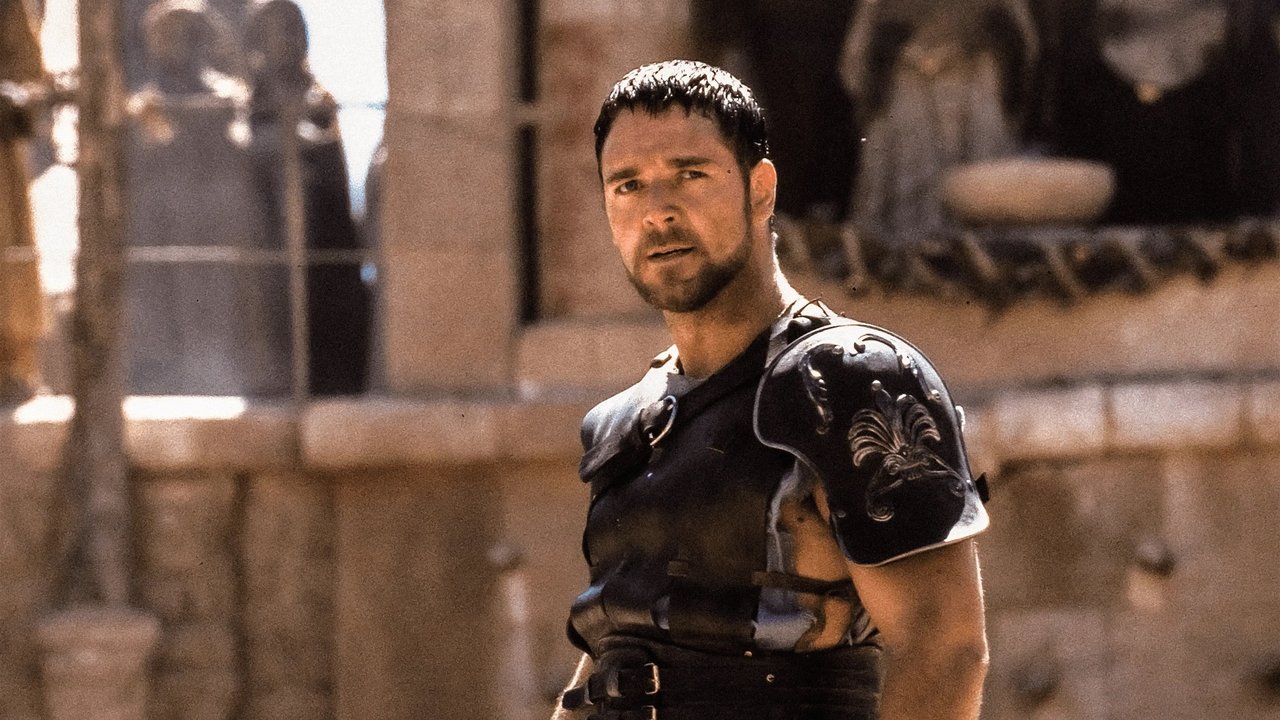
MAXIMUS: Caesar.
MARCUS: Read this.
MAXIMUS: I never acquired the art, sir.
MARCUS: Of course. No matter. In this letter I denote my intention to nominate you to stand for the Emperorship after my death.
MAXIMUS: Caesar, I am honored but --
The aging Emperor Marcus Aurelius reveals his plan to bypass his son and nominate Maximus as his successor to restore the Roman Republic. Marcus reflects on his legacy of war and his desire to return power to the people, while a stunned Maximus grapples with the weight of this unexpected duty.
MAXIMUS: Caesar.
MARCUS: Read this.
MAXIMUS: I never acquired the art, sir.
MARCUS: Of course. No matter. In this letter I denote my intention to nominate you to stand for the Emperorship after my death.
MAXIMUS: Caesar, I am honored but --
Format: Duologue · Genre: Drama · Source: Gladiator · Author: David Franzoni · Characters: Maximus, Marcus
This powerful duologue, "The Dream of Rome," from the acclaimed film Gladiator, presents a pivotal moment of profound political and personal consequence. Set within the intimate confines of Emperor Marcus Aurelius' tent, the scene unveils his confidential plan to bypass his own son and appoint Maximus as his successor, with the ultimate goal of restoring the Roman Republic. It is a deeply moving conversation that explores themes of legacy, duty, and the weight of imperial power, offering a rich tapestry of emotional depth for two male actors.
Marcus Aurelius, an elderly Emperor, embodies the burden of leadership and the poignant realization of his life's work. He is a man grappling with the moral decay of his empire and his own complicity in its decline, seeking to rectify past wrongs through a radical act of succession. Maximus, an experienced military leader and trusted general, is presented with an unimaginable proposition that challenges his loyalty, his ambition, and his understanding of his own place in the world. Both characters are complex men navigating immense pressure and profound personal choices.
"The Dream of Rome" is an exceptional audition piece due to its high stakes, strong emotional arc, and the opportunity it provides for nuanced character development. The scene offers both actors a chance to showcase gravitas, intellectual depth, and the ability to convey profound internal conflict without resorting to histrionics. Its well-crafted dialogue and clear objectives make it an excellent choice for demonstrating strong scene work and a deep understanding of character motivation, particularly for roles requiring authority and moral complexity.
This scene is ideally suited for male actors in the elderly age range looking to portray powerful, authoritative figures with a strong sense of moral responsibility. It's particularly effective for those being considered for "Leading Man," "Patriarch," "Authority Figure," or "Mentor" roles, especially within dramatic and historically-inspired productions. The script's tone and intellectual depth also make it a strong candidate for drama school auditions, agent showcases, and general dramatic practice where a powerful, character-driven piece is desired.
When approaching this scene, focus on the weight of each character's words and the unspoken subtext between them. For Marcus, consider the weariness and regret that underpin his grand vision, finding moments of quiet desperation amidst his pronouncements of duty. For Maximus, his stunned silence and gradual processing of the Emperor's revelation are key; convey his internal struggle between loyalty, honor, and the immense responsibility being thrust upon him. Pay close attention to the shifting power dynamics and the profound respect they hold for one another, allowing their shared history to inform every line.