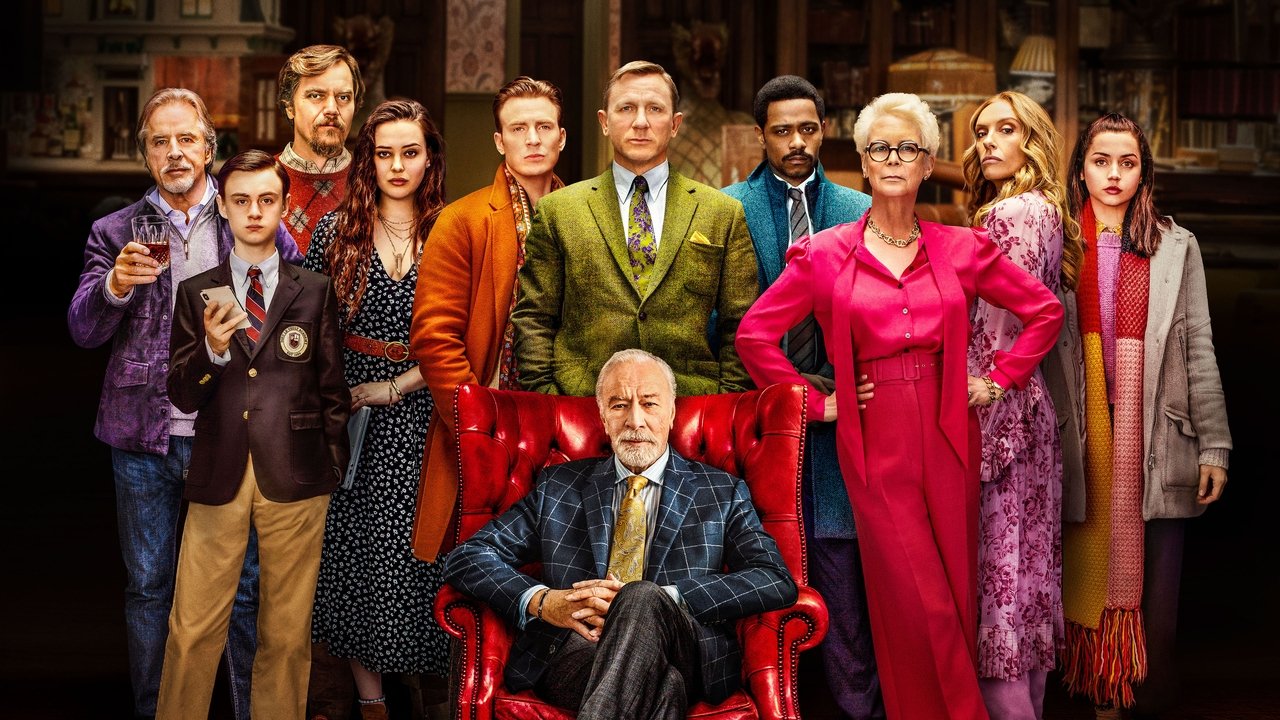

BENOIT BLANC: I've always found it... sad that youth assumes age to be a muffling agent, like cotton gauze. A lessener of desire, curiosity and all the little glass baubles. Of youth. Grief. Why is grief the providence of youth? Maybe it's comforting, the thought that when we'll most encounter it we'll have gained some immunity, maybe by projecting that…
The Inevitability of Truth — Knives Out
Benoit Blanc sits with the elderly Greatnana Wanetta, offering a philosophical reflection on grief, age, and the burden of truth. He gently encourages her to share what she saw on the night of Harlan's death while acknowledging her overlooked presence in the house.
Format: Monologue · Genre: Drama · Source: Knives Out · Author: Rian Johnson · Characters: Benoit Blanc
About This Scene
This dramatic monologue from Knives Out features the renowned detective Benoit Blanc as he engages in a poignant conversation with an elderly character, Greatnana. The scene offers a deep, philosophical reflection on themes of youth, age, grief, and the often-overlooked wisdom that comes with advanced years. Blanc carefully balances his investigative purpose with a profound empathy, attempting to elicit a crucial truth while acknowledging the emotional weight carried by his interlocutor.
Character Analysis
Benoit Blanc is presented here in a vulnerable and introspective light, contrasting with his often eccentric and outwardly confident demeanor. He exhibits sharp observational skills and a sophisticated understanding of human nature, particularly the societal assumptions surrounding age and sorrow. While his core objective is to uncover information, his approach is gentle and deeply respectful, showcasing a nuanced blend of the detective's shrewdness and a compassionate mentor's understanding. His Southern cadence, though not explicitly stated in the text, is a defining characteristic of his portrayal.
Why This Works for Auditions
This monologue is an excellent choice for auditions because it demonstrates a wide emotional and intellectual range within a contained moment. Actors can showcase their ability to handle complex philosophical language while grounding it in genuine connection and an underlying objective. The shift from abstract reflection to a direct, yet gentle, inquiry about a painful truth allows for a compelling display of vulnerability, gravitas, and subtle persuasive skill. It avoids theatricality, instead favoring a quiet intensity that casting directors will appreciate.
Best Suited For
This monologue is particularly well-suited for male actors in the 35-45 age range who can embody a sophisticated and mature presence. It's ideal for those looking to be cast as detectives, mentors, or characters who possess an understated wisdom and empathetic nature. The scene's vulnerable tone makes it excellent for demonstrating an actor's capacity for nuanced emotional expression, moving beyond overt displays to a more internal, reflective performance. Actors aiming for roles requiring a thoughtful and perceptive quality will find this piece highly effective.
Performance Tips
When performing this monologue, focus on the stillness and internal processing of Blanc's thoughts. Allow the philosophical ideas to resonate, but always connect them back to his underlying objective of gently prompting Greatnana. Pay close attention to rhythm and breath, letting the intellectual weight of the words be supported by a grounded emotional core. Avoid rushing the lines; instead, embrace the deliberateness of his reflection. Emphasize the empathy in his voice, ensuring his words land with a comforting, rather than interrogative, tone, even as he seeks to uncover a difficult truth.