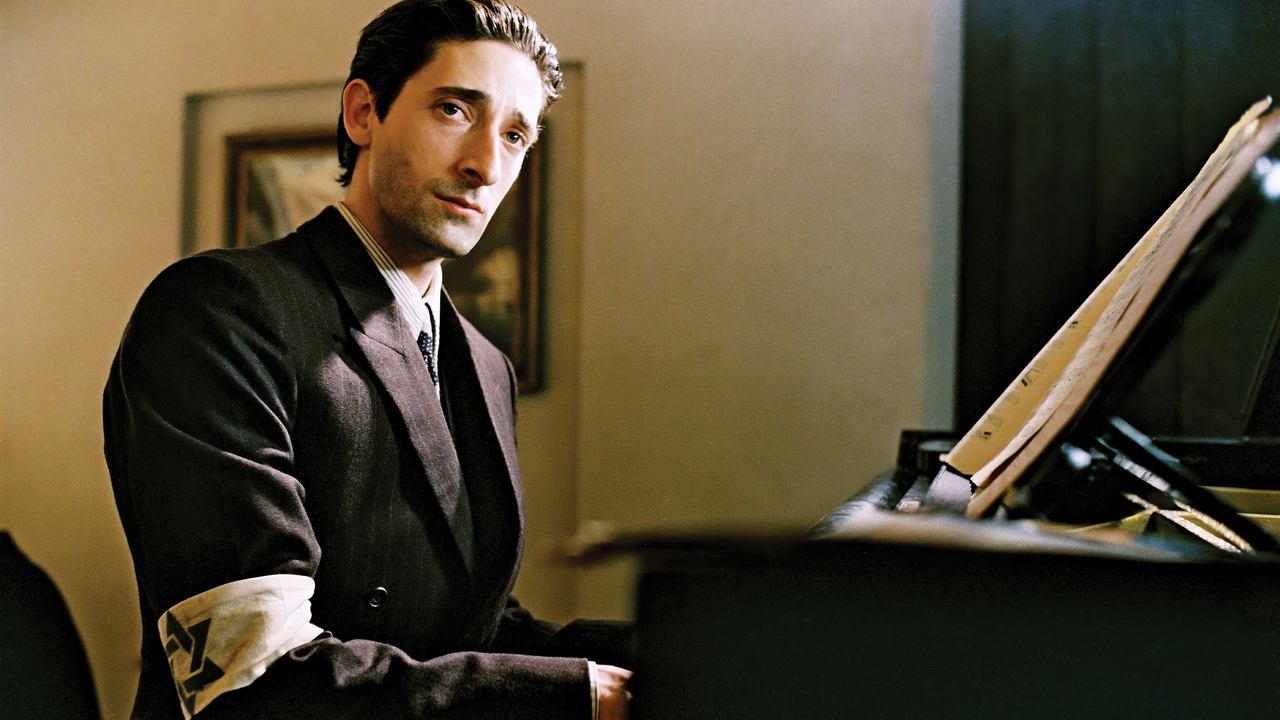
THE GERMAN CAPTAIN: Who the hell are you?
SZPILMAN: I was... I was trying to open this tin.
THE GERMAN CAPTAIN: Where do you live? What's your work?
SZPILMAN: I am... I was a pianist.
THE GERMAN CAPTAIN: A pianist. [He points at the piano] Play.
In the ruins of Warsaw, a starving Jewish pianist is discovered by a German officer while trying to open a tin of food. Instead of turning him in, the Captain is moved by the man's talent and decides to secretly provide him with food and supplies as the war nears its end.
THE GERMAN CAPTAIN: Who the hell are you?
SZPILMAN: I was... I was trying to open this tin.
THE GERMAN CAPTAIN: Where do you live? What's your work?
SZPILMAN: I am... I was a pianist.
THE GERMAN CAPTAIN: A pianist. [He points at the piano] Play.
Format: Duologue · Genre: Historical Drama · Source: The Pianist · Author: Ronald Harwood · Characters: Szpilman, The German Captain
This poignant duologue, "The Last Goodbye," extracts a pivotal encounter from a celebrated historical drama. It depicts the initial, unexpected meeting between a starving Jewish pianist and a German Captain amidst the desolation of war-torn Warsaw. The scene masterfully establishes a tense, life-or-death situation that immediately shifts into something far more complex and human, highlighting a profound moment of shared humanity against a backdrop of unimaginable brutality.
Szpilman is presented as incredibly vulnerable, a ghost of his former self, driven by the basic need for survival. His silence and barely audible responses convey a deep-seated fear and exhaustion, yet his identity as a pianist remains a core, defining aspect of his being. The German Captain, initially stern and imposing, embodies the authority figure but also possesses an unexpected depth, showing a capacity for recognition and empathy that transcends the rigid expectations of his uniform. The contrast between these two individuals, one stripped of everything, the other outwardly powerful, creates a compelling dynamic.
This scene is an exceptional choice for auditions due to its immediate high stakes and dramatic arc. It provides actors with a rich opportunity to explore tension, fear, vulnerability, and subtle shifts in power and emotion within a short timeframe. The dialogue, though sparse for Szpilman, demands powerful non-verbal communication, while the German Captain navigates a transition from intimidating authority to intrigued observer, offering a nuanced acting challenge. Its emotional depth and historical context give it considerable gravitas.
"The Last Goodbye" is particularly well-suited for actors aiming for drama school auditions, agent showcases, and self-tapes where demonstrating emotional range and intense focus is crucial. It caters to casting types such as the 'Leading Man' showcasing vulnerability, the 'Authority Figure' revealing unexpected compassion, and actors comfortable with 'Intense' and 'Gritty' material. Actors who can convey profound internal life with minimal dialogue will find this scene a powerful vehicle for their talent.
For Szpilman, focus on the physical manifestation of starvation and fear, letting every movement and held breath convey his desperation. His line delivery should be almost spectral, yet imbued with the lingering dignity of his former self. For the German Captain, begin with a rigid, imposing physicality and vocal tone, gradually allowing a flicker of curiosity and perhaps even a hint of respect to break through, particularly as Szpilman's identity is revealed. Emphasize the gradual human connection forming in the subtext despite the overt power imbalance.