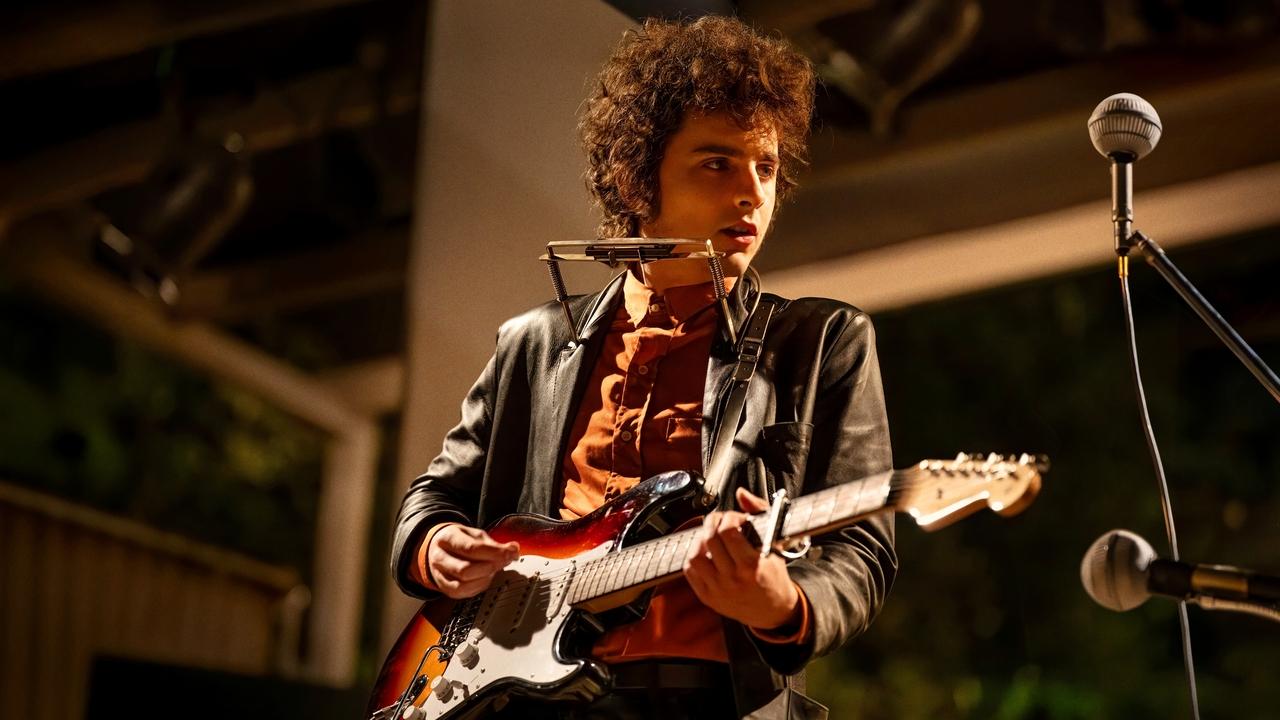
A young Bob Dylan performs a comedic anecdote at Gerde's Folk City about being paid in chess pieces for a gig in New Jersey. The scene captures his early stage persona—nervous, witty, and slightly edgy—as he transitions from a storyteller into his musical performance while acknowledging Joan Baez in the crowd.
BOB: And the manager, he looks at me and says, 'We don't pay in money here in East Orange.' He says 'We pay here in chess men.' And I say, 'Okay, gimme my chess men then.' And he reaches under the bar and pulls out a King and Queen. So, I take my King and my Queen down the street to a bar. And I go
Create a free account to explore more
Upgrade to Pro for full access — £6.99/month
Director's Notes
Explore More
Want expert coaching on this scene?
Browse our curated list of acting coaches, dialect specialists, and more.
Need representation?
Browse verified agents and casting directors in our directory.
How well does this scene match you?
Save your casting profile to see match scores on every scene.
Try Headshot AnalyserGo Pro
£6.99/mo
- ✓ Unlimited scene reading
- ✓ PDF downloads
- ✓ Director's Notes
- ✓ Headshot Analyser
- ✓ Cover Letter Generator
- ✓ Practice Mode
- ✓ Agent Connect
- + 1,000+ scenes
More from A Complete Unknown
Why did you come here, Bob?
from A Complete Unknown
In a smoke-filled hotel room, Bob Dylan is consumed by his songwriting process, neglecting Joan Baez's presence. The tension peaks as Joan confronts him about his dismissive behavior, leading to a sharp exchange about his artistic ego and their upcoming tour.
Making Yourself into Something Different
from A Complete Unknown
Bob and Sylvie discuss the philosophy of self-reinvention and the relevance of folk music in a changing world. Bob expresses frustration with industry pressure to stick to traditional standards, while Sylvie encourages him to embrace the urgency of the present moment.
Joan Confronts Bob's Criticism
from A Complete Unknown
In the early morning light of a New York apartment, Joan and Bob discuss their musical origins and creative processes. The tension rises when Bob bluntly criticizes Joan's songwriting style, leading to a sharp exchange about authenticity and artistic ego.
The Freak Show Theory of Performance
from A Complete Unknown
Bob Dylan shares his philosophy on performance and fame with Sylvie, arguing that true artists must embrace being social 'freaks' to hold an audience's attention. He explains the delicate balance between being a spectacle that people can't look away from and making the audience feel safe in their own normalcy.
Similar Scenes
Nadine's Breakdown
from The Edge of Seventeen
A high school student reaches a breaking point, confessing her deep-seated feelings of inadequacy and isolation to an adult figure. She grapples with the pressure of her mother's expectations and the grief of losing her father.
Being John Malkovich - The Interview
from Being John Malkovich
Craig Schwartz, a struggling puppeteer, interviews for a filing job at the eccentric LesterCorp. The scene highlights the surreal nature of the company's office—located on a floor with half-height ceilings—and establishes the bizarre, existential tone of the workplace.
The Replacements - The Quarterback Offer
from The Replacements
Coach McGinty visits Shane Falco at his boat yard to recruit him as a replacement quarterback during a professional football strike. Shane is hesitant and haunted by his past failures, but McGinty challenges him to reclaim his fire and take one last shot at glory.
Isabel and Pilar's Talk
from Love, Victor
A mother catches her teenage daughter attempting to send an inappropriate photo to her long-distance boyfriend. The confrontation shifts from a disciplinary moment to a vulnerable conversation about self-worth and the difficulty of letting go as a parent.