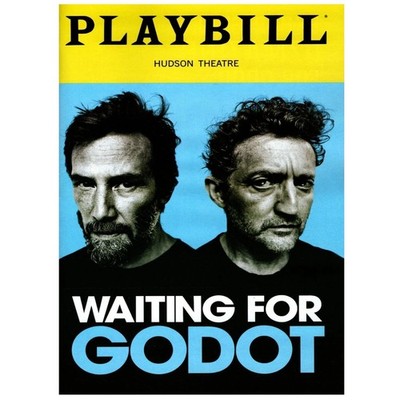
VLADIMIR: Was I sleeping, while the others suffered? Am I sleeping now? To-morrow, when I wake, or think I do, what shall I say of to-day? That with Estragon my friend, at this place, until the fall of night, I waited for Godot? That Pozzo passed, with his carrier, and that he spoke to us? Probably. But in all that what truth will there be?
Act II — Waiting for Godot — Waiting for Godot
Vladimir and Estragon continue their endless wait for the mysterious Godot. Vladimir experiences a moment of profound existential crisis before being interrupted by a Boy who delivers a message that Godot will not be coming today.
Format: Scene · Genre: Comedy-Drama · Source: Waiting for Godot · Author: Samuel Beckett · Characters: Vladimir, Estragon, Boy
About This Scene
This three-minute group scene, taken from Act II of Samuel Beckett’s “Waiting for Godot,” captures a pivotal moment of existential reflection and subsequent interruption. Vladimir, entangled with Estragon in their seemingly endless wait, grapples with the nature of time and memory. Their profound, yet often humorous, philosophical struggle is momentarily disturbed by the arrival of a Boy, who brings a familiar message that reiterates their ongoing predicament.
Character Analysis
Vladimir, aged 35-45, is a character whose internal world is rich with anxiety and a deep-seated need for meaning amidst the absurdity. He is the more restless and intellectually inclined of the pair, continually trying to make sense of their situation, even as it appears nonsensical. Estragon, also 35-45, is more grounded in his physical discomforts and immediate needs, often bringing a comedic foil to Vladimir's intellectualizing. He is vulnerable, pragmatic in his own way, and frequently forgets past events, highlighting the cyclical nature of their existence. The Boy, though brief, represents a recurring interruption and a fragile link to the outside world, bringing both a message and a sense of routine to their waiting.
Why This Works for Auditions
This scene is an excellent choice for auditions due to its blend of comedy and drama, allowing actors to showcase a broad emotional range. The minimalist setting and dialogue place a strong emphasis on character connection and vocal delivery, making every word and pause significant. It provides a unique opportunity for actors to portray vulnerability, intellectual struggle, and comedic timing within a tightly structured three-minute piece, demonstrating depth and versatility to casting directors.
Best Suited For
This modern-classic scene is ideally suited for actors aiming for drama school auditions, general practice, and competitions, particularly those who excel at character work. It's perfect for performers who can embody the "Everyman" archetype while also bringing out the nuanced comedic and dramatic elements. Actors skilled in portraying vulnerability, who can navigate the philosophical underpinnings of absurdism and existentialism, will find this piece particularly rewarding and impactful.
Performance Tips
When performing this scene, focus on the inherent rhythm and musicality of Beckett’s language; every word has weight. For Vladimir, explore his internal turmoil and intellectual restlessness, allowing moments of profound thought to land while still maintaining a sense of the absurd. For Estragon, emphasize his more physical pain and forgetfulness, using these traits to create specific, grounded reactions to Vladimir’s musings. When the Boy enters, ensure a distinct shift in energy and tone, maintaining a sense of polite formality that contrasts with the disheveled nature of the older men. Pay close attention to the spatial relationship between the characters, as their proximity and distance often reflect their emotional states.